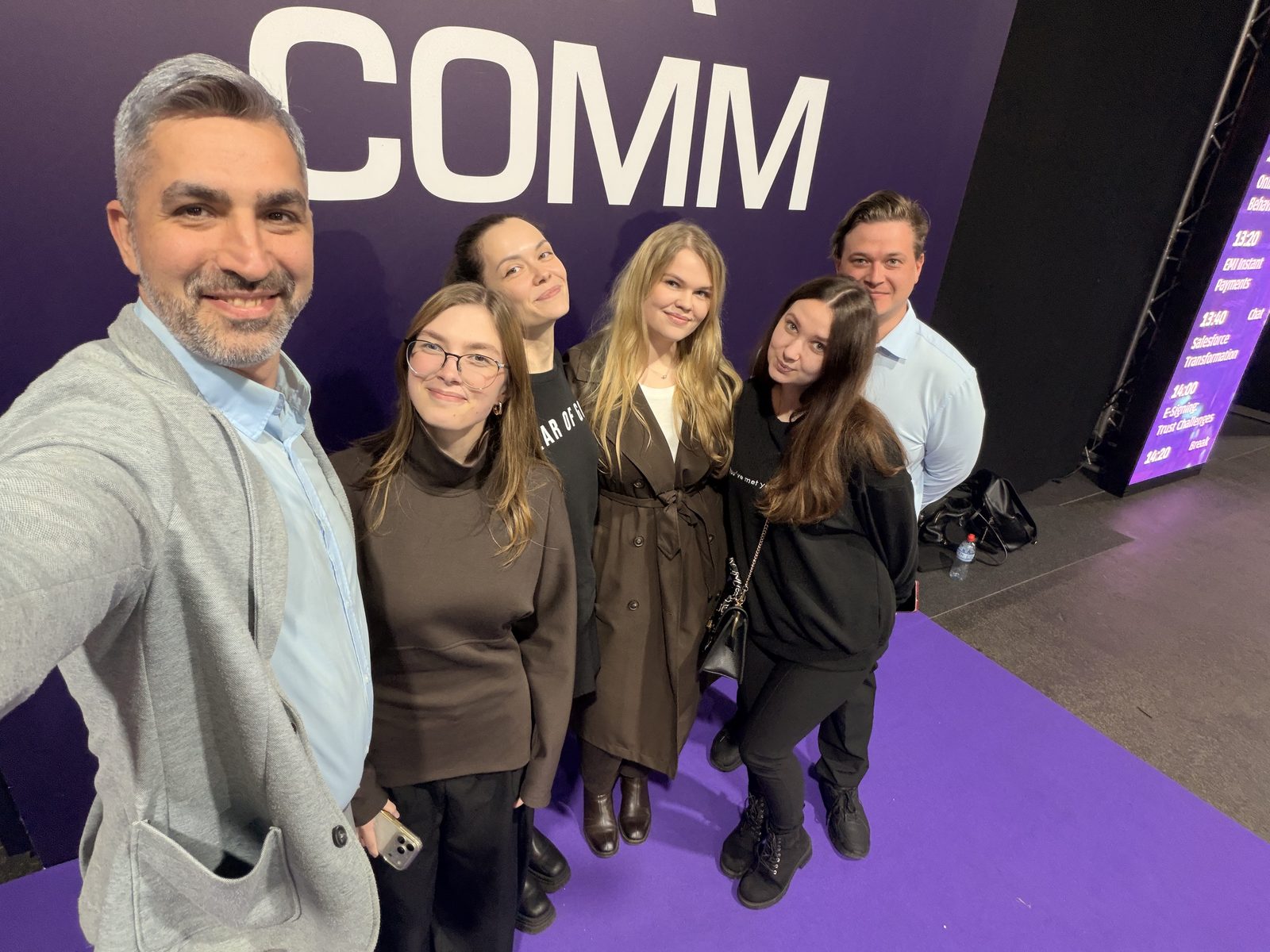
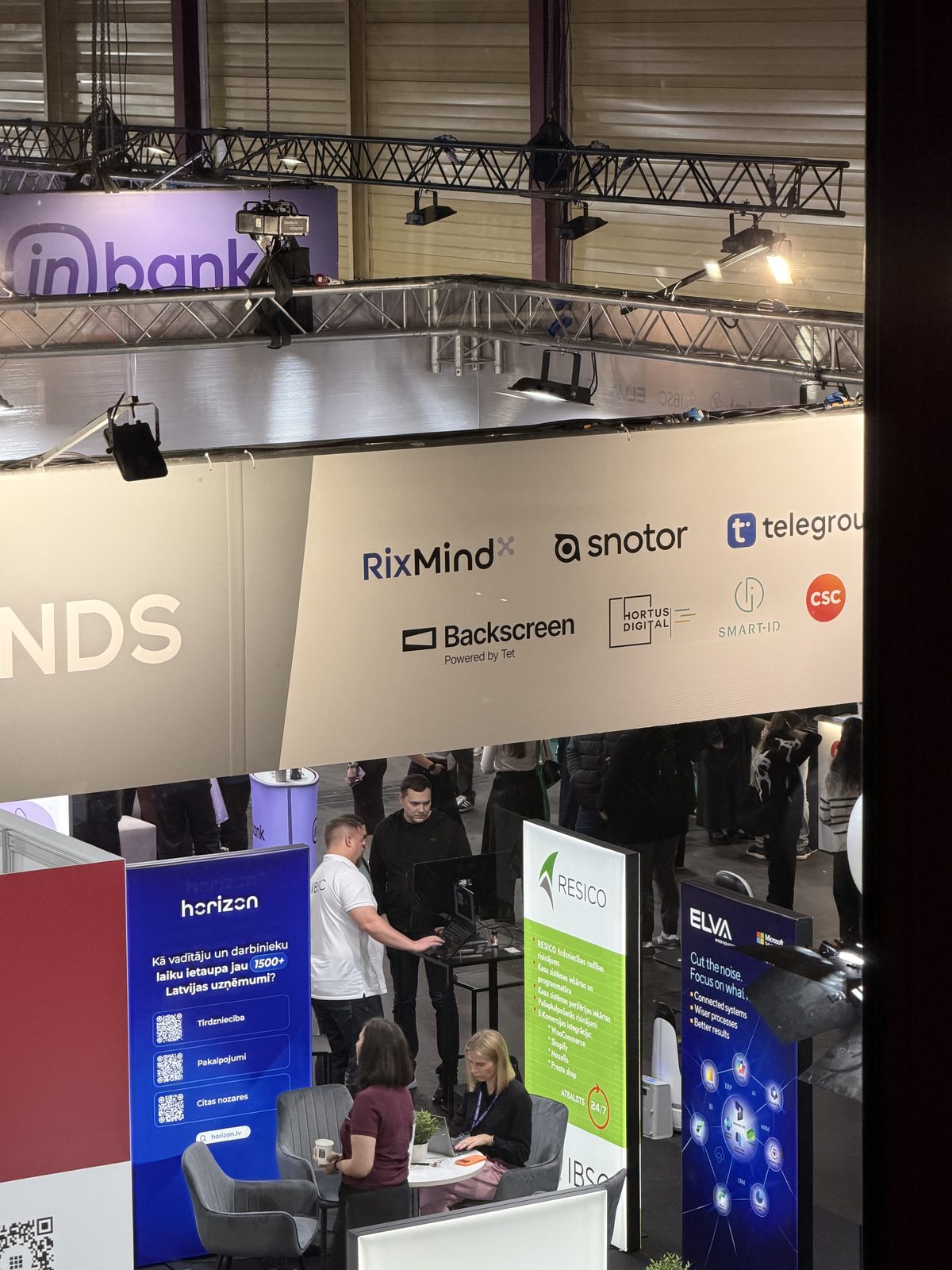
On 8–9 October 2026, Riga hosted RIGA COMM 2026, the main business technology fair in the Baltics and, at the same time, Latvia’s biggest marketing conference of the year. A RIGA COMM review by the MATCH team has become a tradition. For the second year in a row, we went to the conference not only for team building, but also, we admit, to take our own measure of what is happening in Baltic (and especially Latvian) marketing. Below is a long and subjective breakdown: what has changed in a year, who we criticise, who we praise, and our annual letter to the organisers.
Preparing this article took 12 million tokens. But don’t worry: the RIGA COMM presentations burned through thousands of times more.
RIGA COMM 2026 meant two days, 8 stages, 172 talks and 227 speakers. If we sort all 172 talks by their main topic, AI as a standalone topic took 21%. Cybersecurity and digital trust took exactly the same share: they came up on seven of the eight stages (after the scandal over the CSDD leak of 1.2 million people’s data). Next come digitalisation and IT infrastructure (14%), marketing and e-commerce (16% combined), entrepreneurship and growth funding (9%), HR (8%), industry cases (7%) and finance (4%). At the same time, 42% of the talks have AI, agents or automation in their title. AI is no longer a separate topic. It has become a seasoning for all the others.
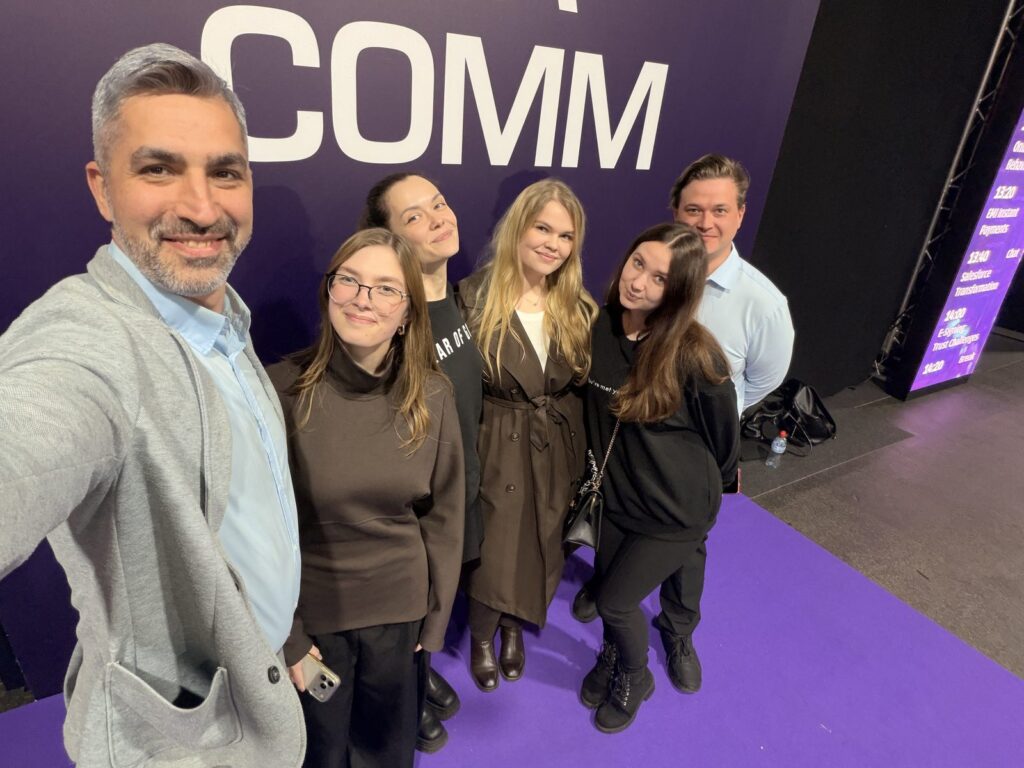
Last year there were six of us, and we rated 26 sessions. This year, eight people covered 98 of the 172 talks, which is 57% of the programme. Our “raiding party”: six marketers (strategy, PPC, content, project management), a lawyer and our Head of HR. Each of us had our own angle: numbers, practical use, delivery.
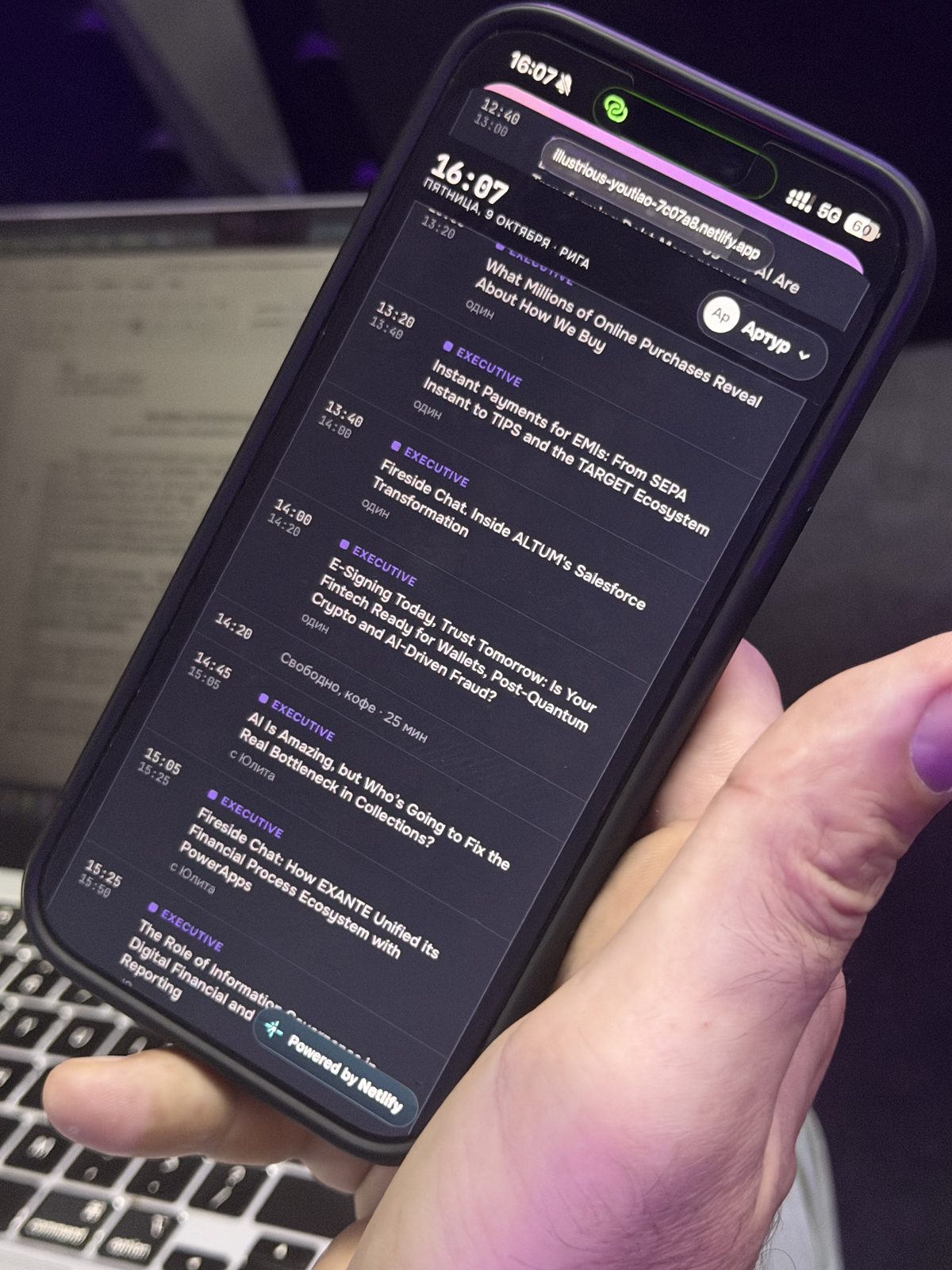
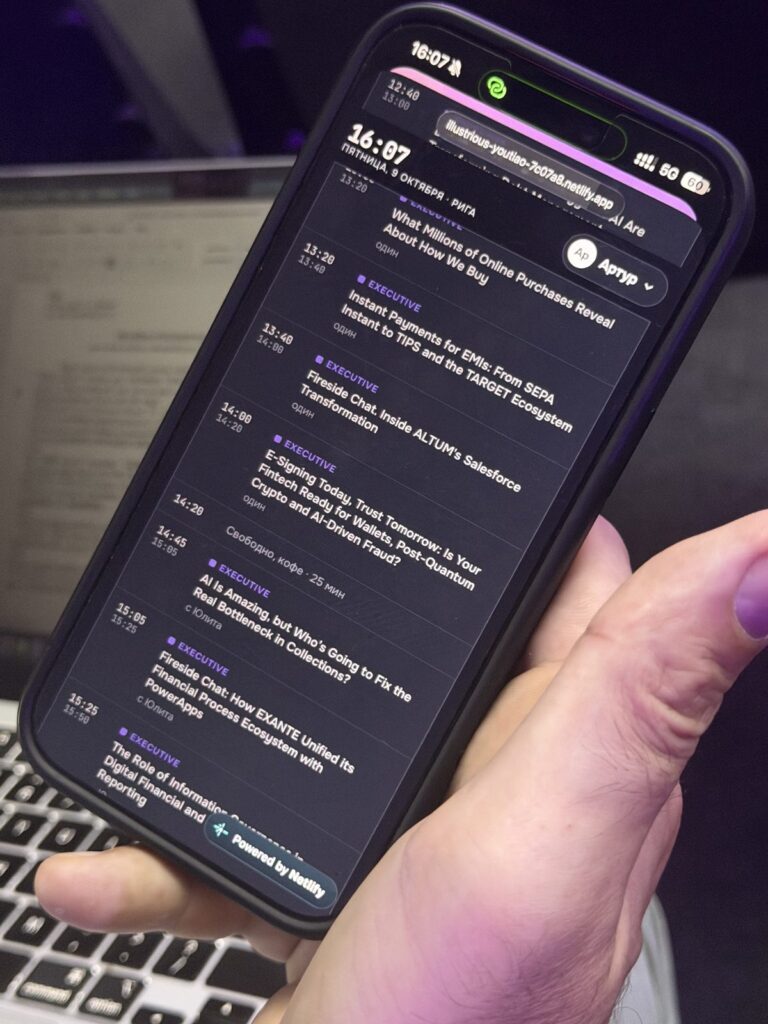
This year we also went further. We built a professional profile for each team member, sorted all 98 talks by specialisation, and vibe-coded a phone app where everyone could see their own schedule, a map of the venue and where their colleagues were at that moment.
Below are the team’s main takeaways. The rule is the same as before: we criticise anonymously and praise by name.
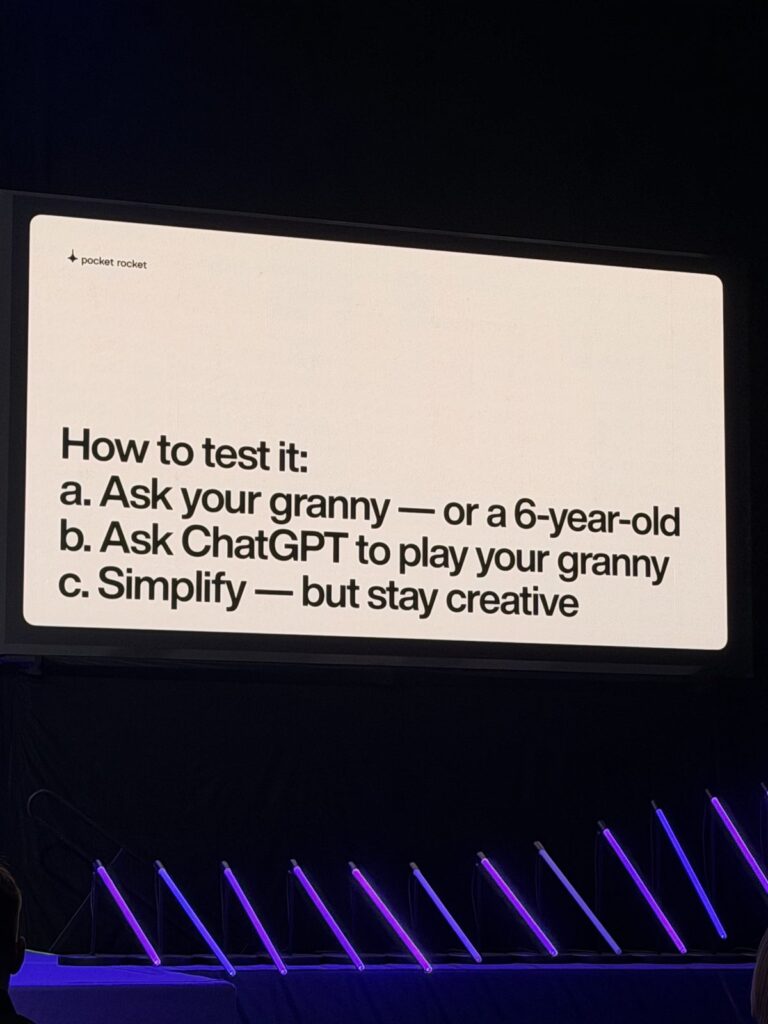
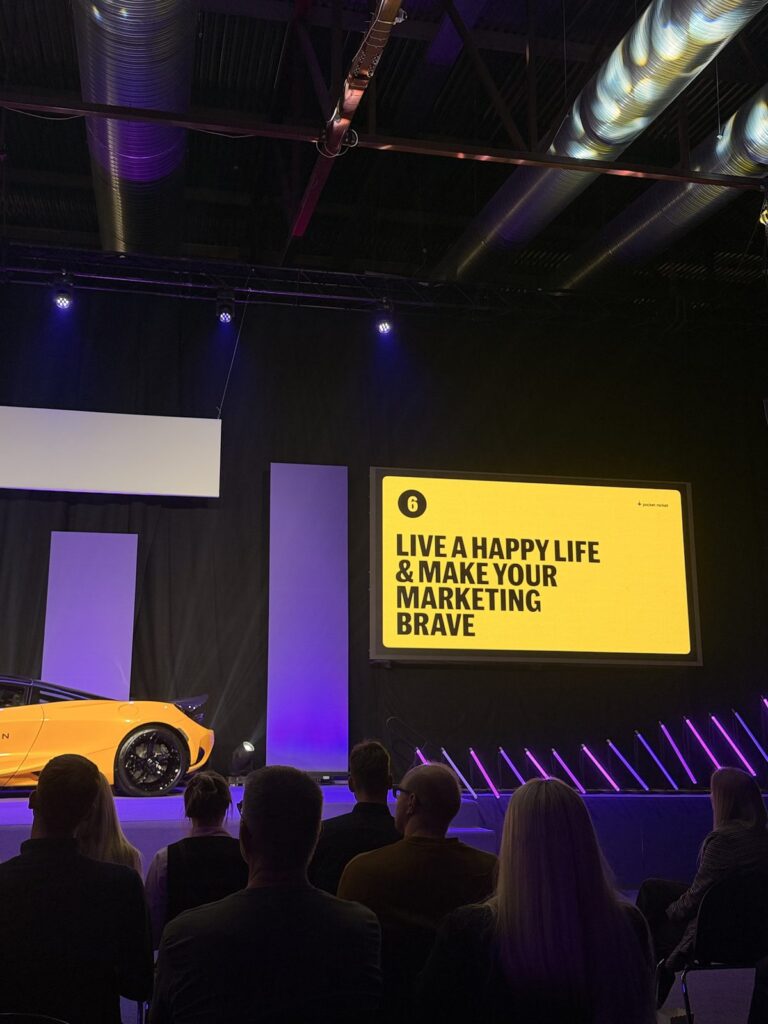
AI grew faster in a year than Latvian marketing did
In one year, models learned to write code, work as agents and run entire processes. It’s a pity Latvian marketing didn’t make the same leap: in that same year, we got as far as a slide called “What is an agent”.
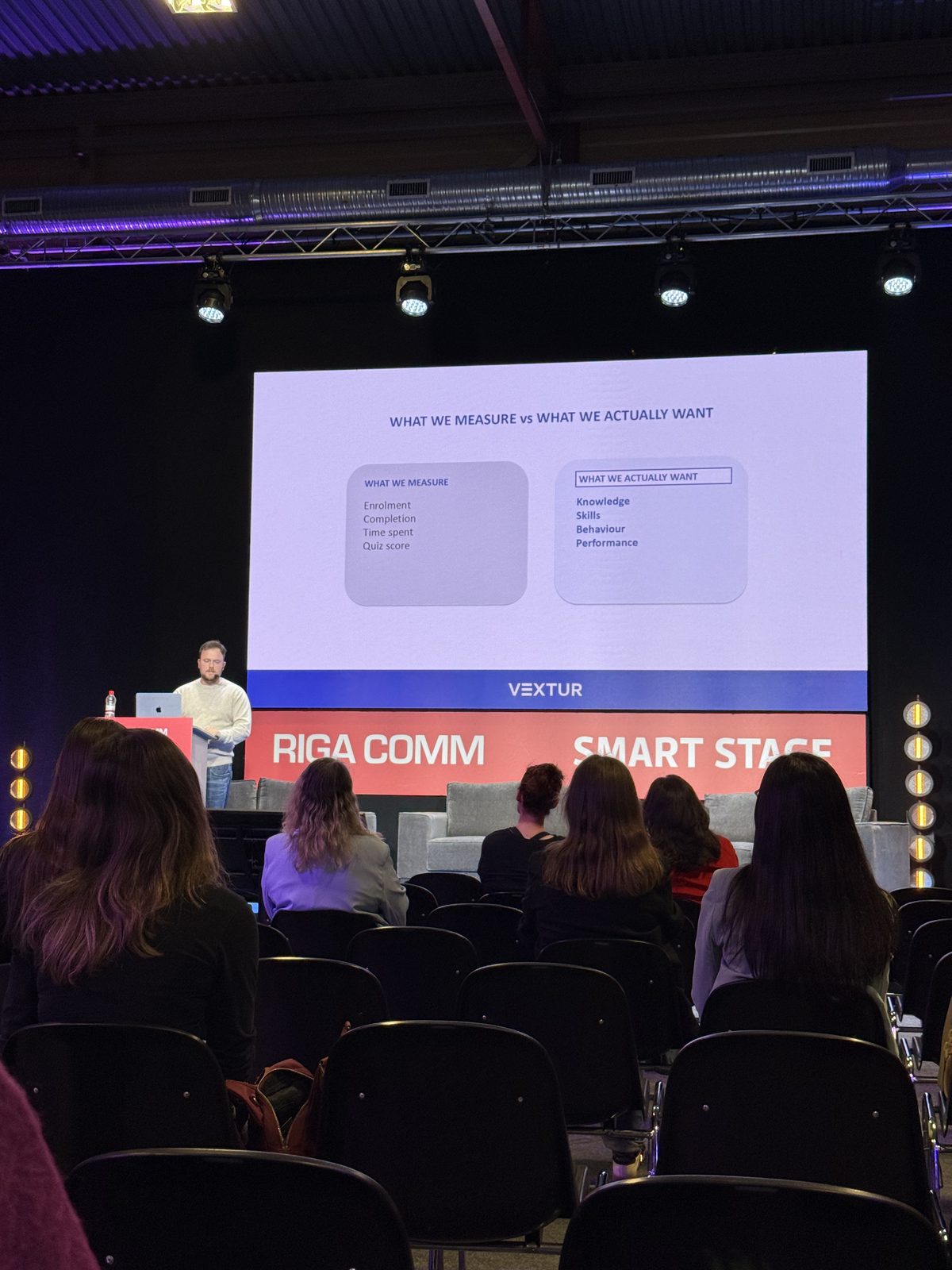
A year ago, we criticised speakers for replacing ideas with AI. This year, AI honestly did its part of the job, and Claude Design worked overtime: neat slides, expensive-looking fonts, trendy gradients, and not a single line of yellow text on a white background. But last year’s problem is still here. Original data, original conclusions and a clear position were just as rare as in 2025. The better a presentation looked, the harder it was to tell what the speaker had added personally.
Yes, numbers did appear. This year the slides were full of percentages. But many of them had no source, some clearly came from self-reported surveys, and one, as the speaker himself admitted, was generated by AI (to be fair, it was a live demonstration of an AI hallucination, and the speaker caught it himself). We got exactly what we asked for last year, but in an AI version: the numbers are there, the trust is not.
The epidemic of sameness has reached the stage
Some speakers complained about emails that are written by AI and read by AI. Others complained about an internet full of identical websites. Others still said that AI gives back “the same thing, just neater”. Meanwhile, we were looking at a portfolio where six projects for six brands looked like one.
The talks themselves were no exception: many of them repeated the same basics. For example, in half a day on one stage, three talks explained how an AI agent works. Or markdown file hygiene: 20 minutes on what an .md file is and why it’s important to use one, because otherwise things won’t go very well.
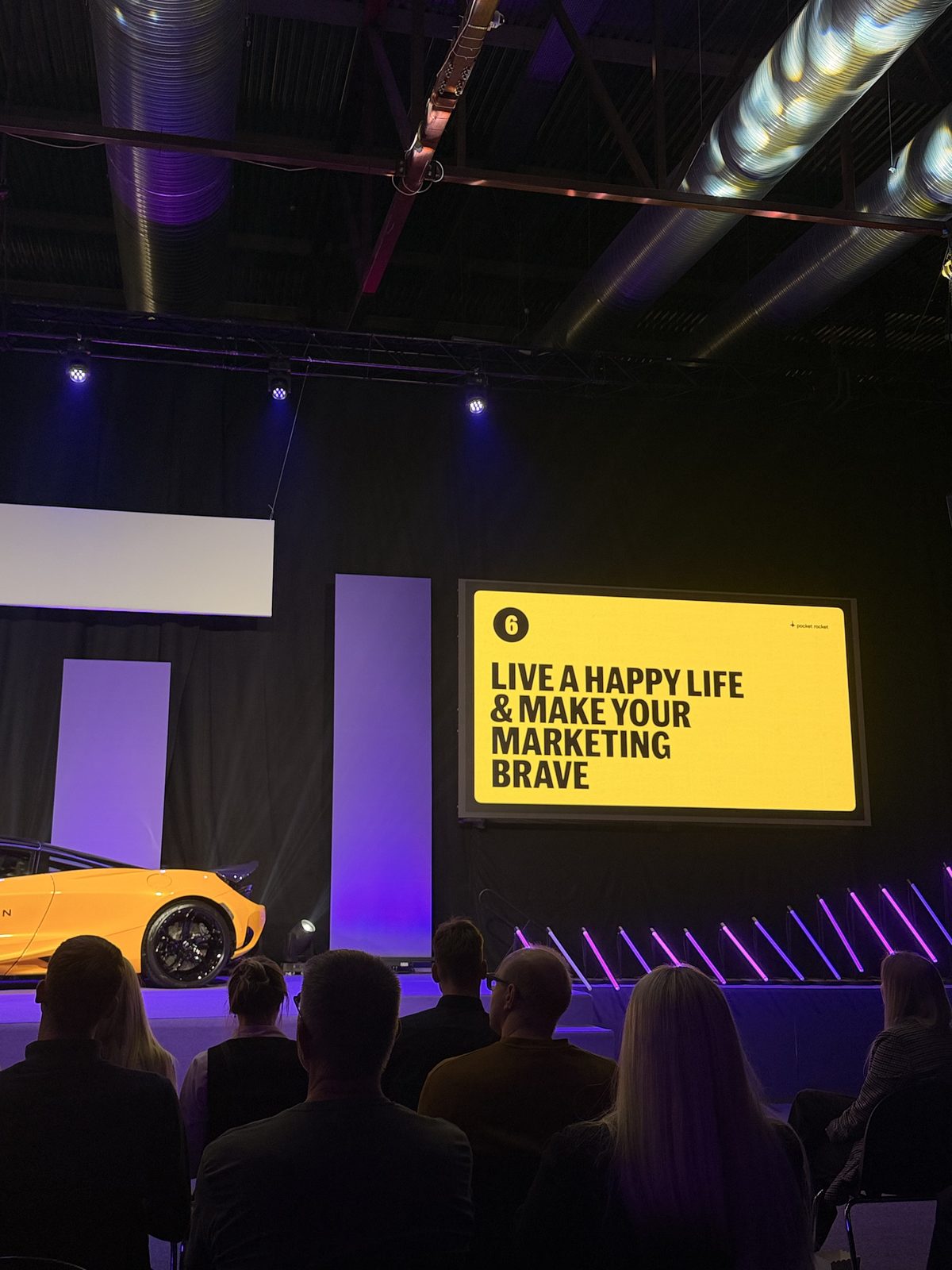
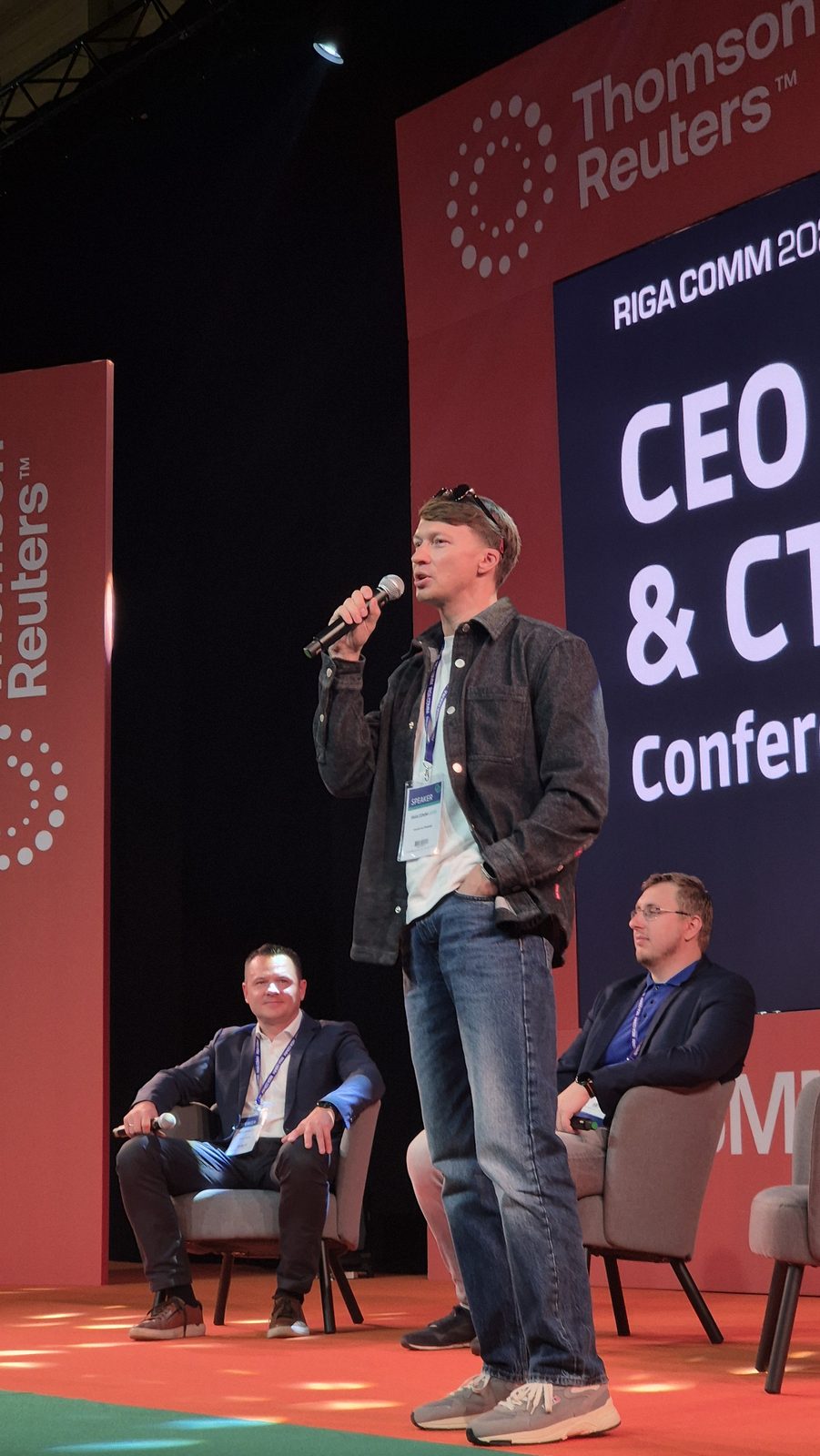
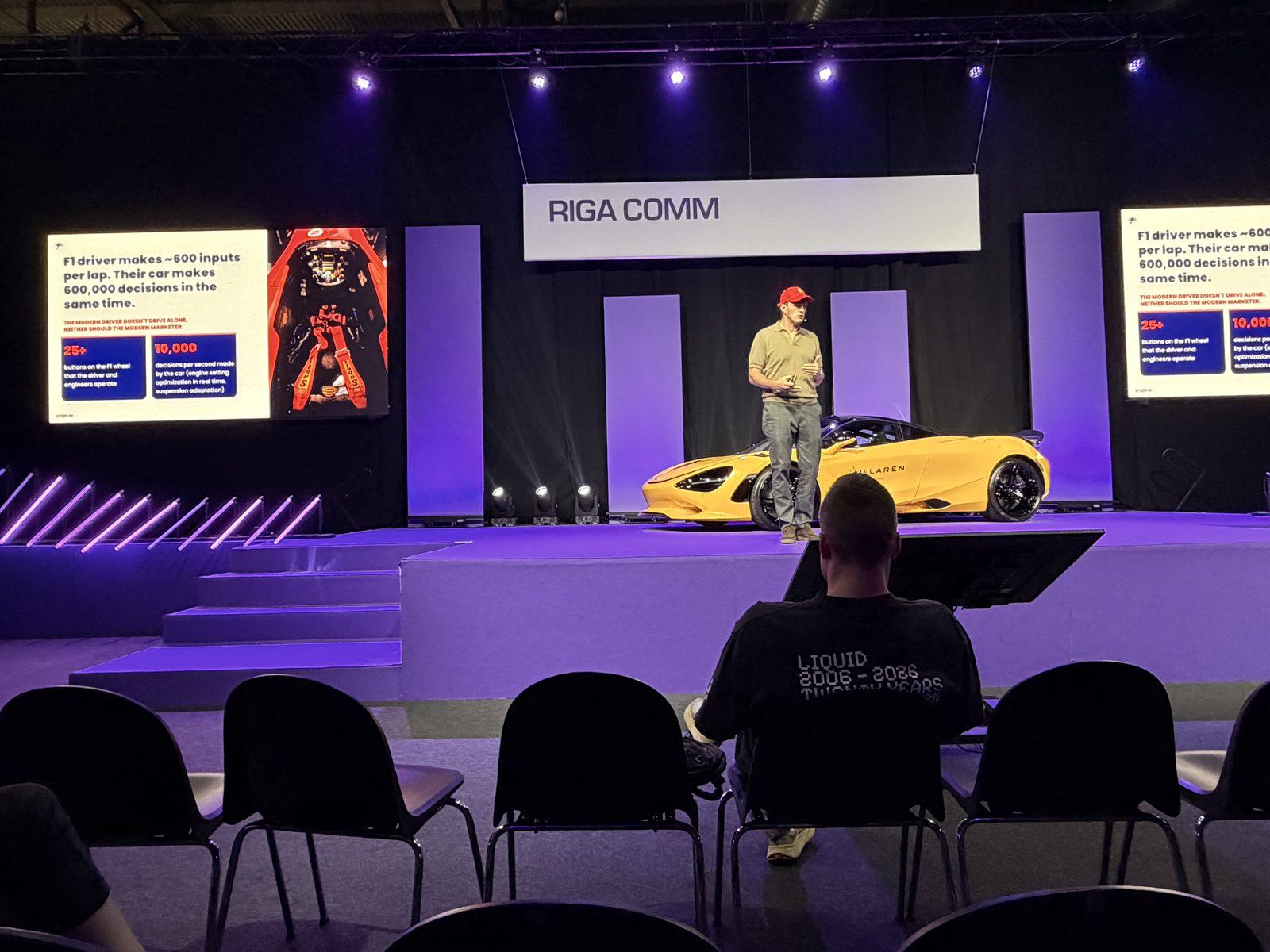
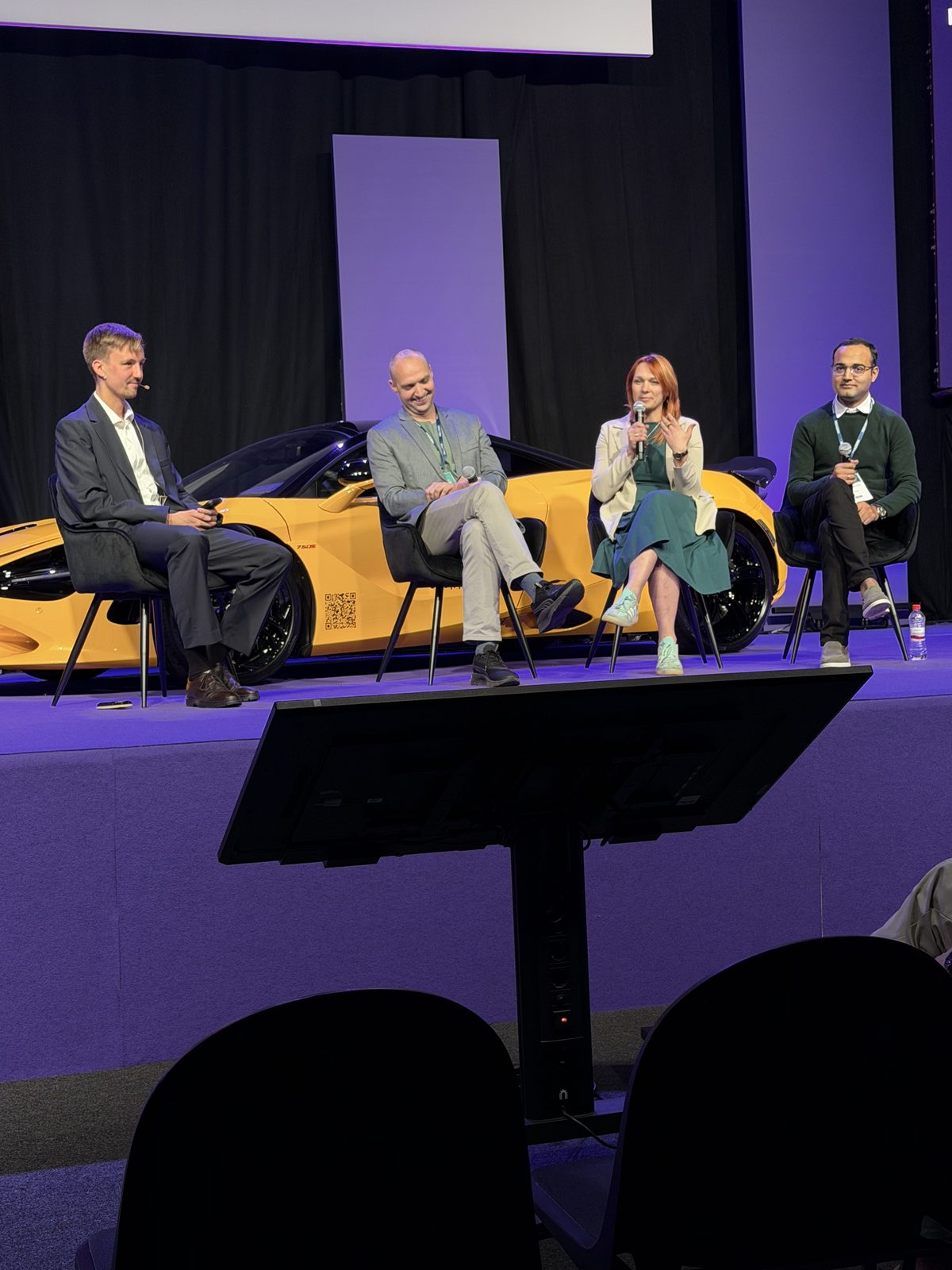
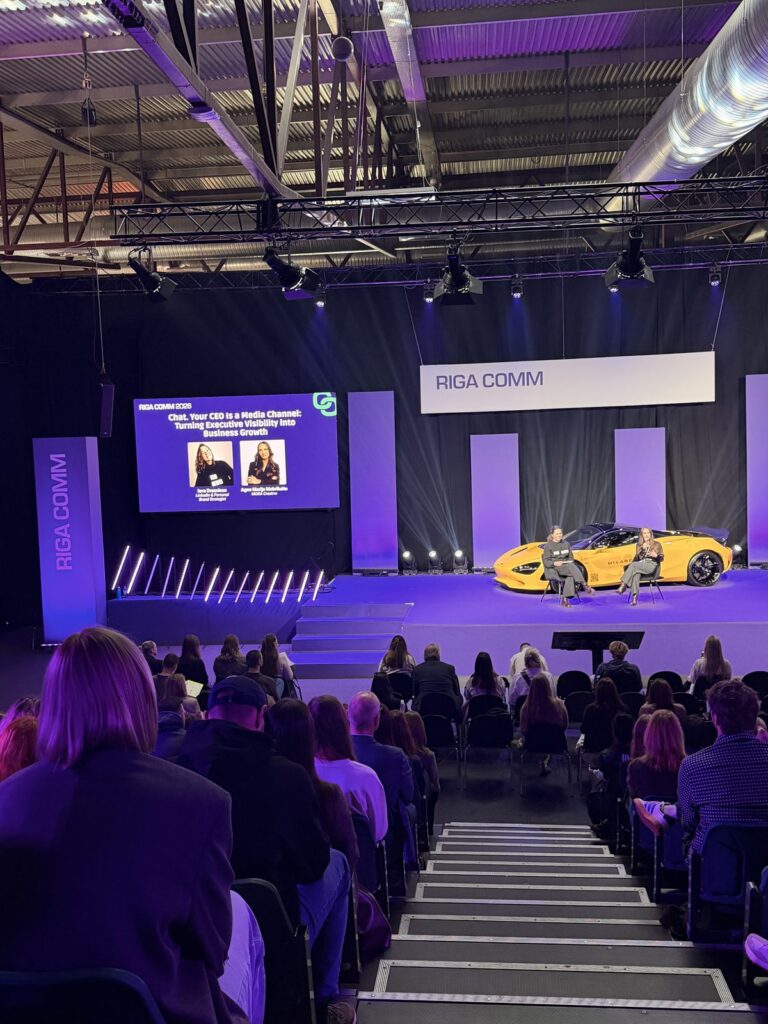
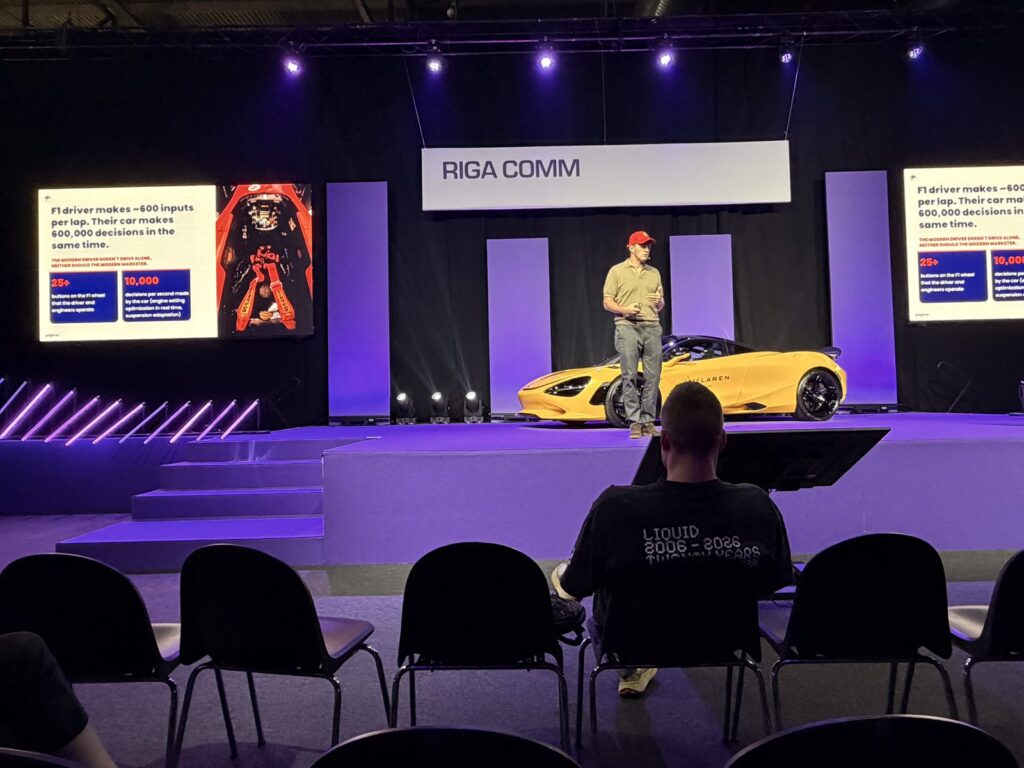
That’s why talks where the speaker is more than a layer between a paid GPT account and a teleprompter feel so fresh. Alex Danchenko (Co-founder & COO, Yespo) kept up his standard, just like last year. He built his talk “Speed Wins the Race: 10,000 Decisions Ecommerce Shouldn’t Be Making by Hand” around a simple framework: which things stay with the marketer and which decisions go to AI. For each one, he had a case with a number. And he wrapped it all nicely in a Formula 1 theme – supercar in the background, a Ferrari cap: the perfect balance between a show and really useful information.
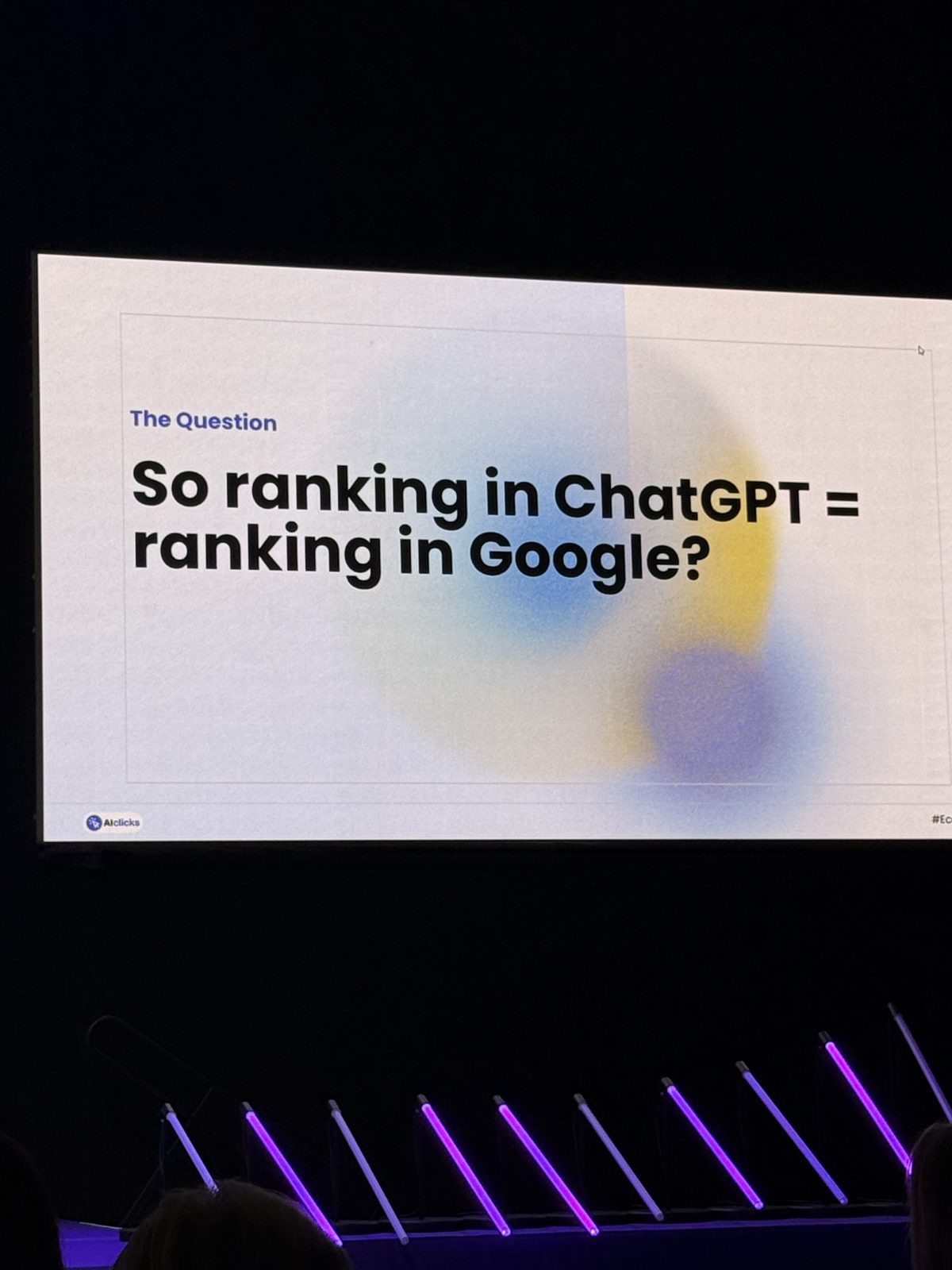
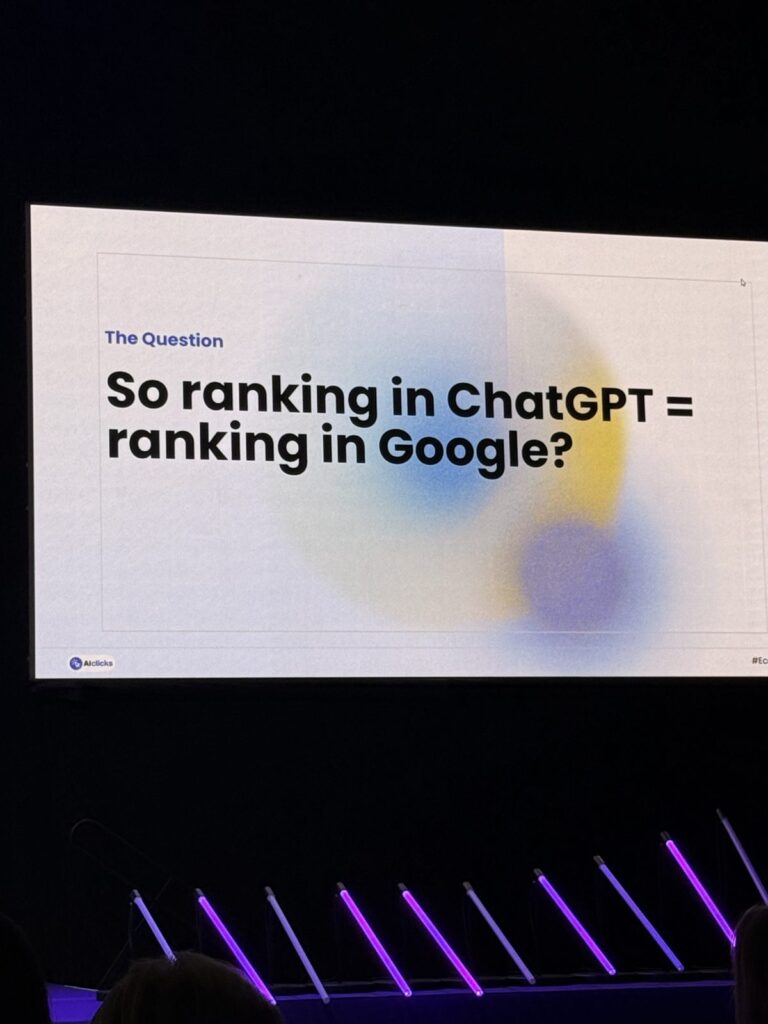
Almost the only “no-makeup” presentation came from Niks Vilciņš, Head of SEO at Infinitum Agency (“Who Stole My Traffic? Surviving the Shift from Traditional SEO to AI-Assisted Search”). An SEO specialist who called himself an “SEO dinosaur” and apologised for the design of his slides gave one of the most substantial talks on the Digital Stage. Concrete advice with numbers: how to prepare for AI search on the technical side and on the content side. And a basic, if not innovative, conclusion: if you were doing well with traditional SEO, you will do well with AI search too. This would be especially useful to hear for businesses that urgently want “that GPT thing to start showing us”.
Self-promotion on stage hasn’t gone anywhere
As usual, talks with attractive titles turned out to be disappointing. A clear example: the head of a sales agency talks about a common management problem. Twenty minutes of reading from a teleprompter, with constant stumbles, which was basically a description of the problem named in the title. And if the talk was meant to promote the agency, it missed the chance: for a sales agency, the way you present on stage is the best sales pitch.
Meanwhile, the best talks of the conference came from vendors. Montonio showed data on 15 million payments from 8,500 online shops. Taavi Raidma (“What Millions of Online Purchases Reveal About How We Buy”) shared interesting statistics on how shoppers behave in the Baltics, Poland and Finland. His colleague Marge Maidla (“Sell More Without Spending More”) spent 10 minutes on one single problem, the 7% of payments that are never completed. She showed the full maths of the case and gave a warning: check which sales your tools are taking credit for.
So the real difference is what a speaker brings. Some vendors come to share what they have learned thanks to their product. Others come to show the product itself, or themselves. And it’s three times as sad when there is nothing to show at all.
If you squeezed all the AI content of the conference into one slide
If you squeezed all the AI content of the conference into one slide, it would say: “Give AI data. Set the rules. Assign a process owner. Leave the decisions to people.” That’s the whole common denominator of dozens of talks.
The idea itself is right, no argument there. The problem is that it has become a cliché, and speakers keep presenting it as an insight, although we heard all these phrases back in 2023.
Overall, there was a sense of confusion. It’s as if most people spent a whole year without figuring out how to use AI in a creative, unusual and measurable way. Instead, they decided either to complain about a well-known problem or to give a simplified 20-minute crash course on the benefits of AI for junior marketers.
Our Head of HR summed up the HR tech stream in one sentence:
“We introduced AI and it (somehow, magically, who needs the details anyway) improved [insert random HR metric]. HR person without AI – bad, arrow go down. HR person with AI – wow, so good! Arrow go waaaay up. Thank you for your attention!”
Head of HRMATCH Agency
And if in 2027 we hear the same mantra again, something like “stop doing it by hand, write good prompts for AI and everything will be awesome”, here is what it really means: “AI is now smarter than us, and we don’t know what to do with it next. So here’s a separate lecture about it. And a panel where everyone agrees.”
Any AI assistant can now draw you a success story. It can’t give you your own data, your own experiment or an honest story about a failure. Besides the speakers we have already mentioned above, our team members want to name a few more who had at least one of the three.
Gianluca Giuliani, Founder, Living Off AI, “Stop Doing It by Hand: How Teams Automate Processes with AI Inside Big Companies”. Four real implementations with before-and-after numbers: document review at a law firm went from 2–5 days to 10 minutes, a factory shift log was automated in two days, and 150 invoices a month at a non-profit were automated in one day. And an honest reason why it doesn’t work for others: “the process has no owner”.
Vitalijs Butenko, Head of Legal, Compliance & Group Communications, Roche Digital Technology, “When AI Agents Negotiate: Lessons from Simulation Experiments”. His own research, not Roche’s. He started with a classic fairness test from 1986: split €10 equally with a partner who played fair before, or split €12 with one who kept almost everything. The fair choice costs you €1. Humans chose fairness in 74% of cases; in 2026, four AI models in four languages chose it in 93–100%. But when the models acted as someone’s agent and chose a supplier on their behalf, fair choices dropped to 0–4%, even though fairness would have cost the client just 2% more. With an explicit “maximise gains” instruction, they dropped to zero. The pattern held in English, German, Russian and Latvian. AI is fair when the choice is its own, but not when it decides for someone else. It is also very good at complex deals: with 8 parameters there are 86,400 possible packages, and AI quickly finds trades that work for both sides, a job that used to need a team of experts. So the real risk is that AI optimises too well, exactly for what it was told. His advice: challenge the frame, design the process, and only then let AI optimise.
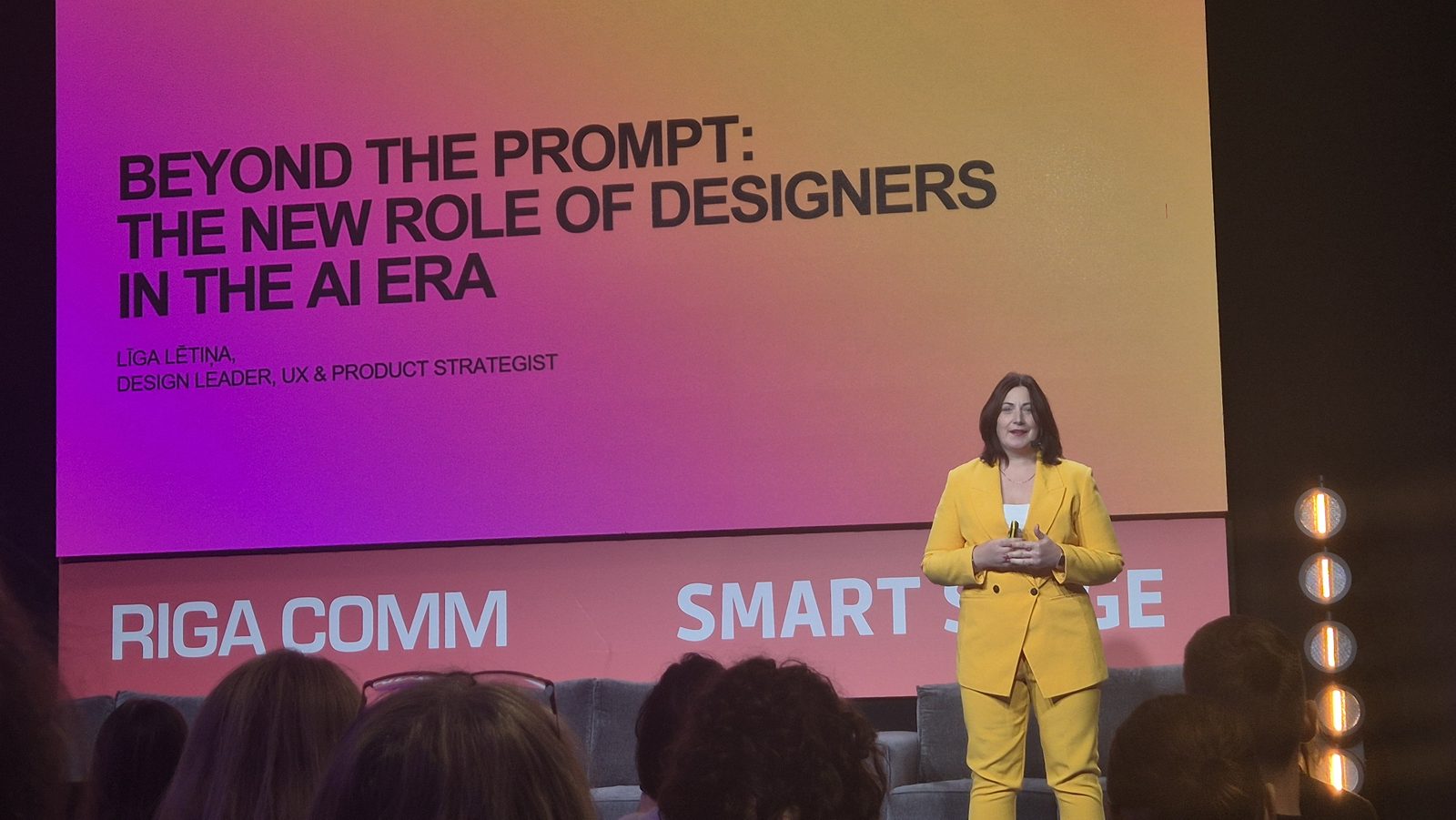
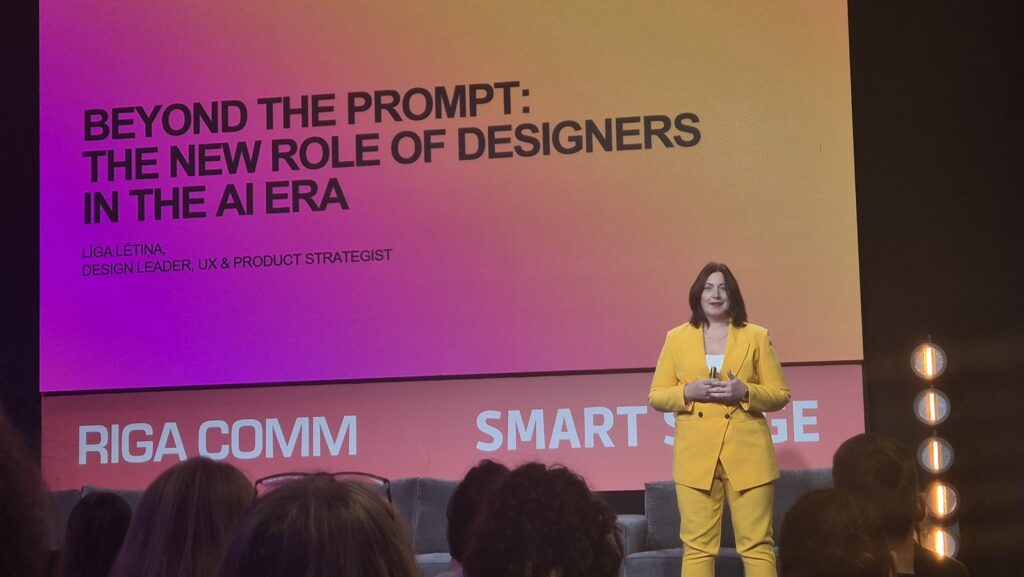
Līga Lētiņa, Design Leader, UX & Product Strategist, “Beyond the Prompt: The New Role of Designers in the AI Era”. In her talk, Līga explained where a designer’s real value lies today, and that value is product thinking. Anyone can now Claude up a logo or an interface. Few can understand what business and user problem a product solves, frame the problem before jumping to solutions, and test hypotheses instead of trusting taste. A designer sees the whole product: the user journey, business goals, and how a brand becomes an experience that leads to action. AI is a tool in the designer’s hands, but the designer still asks the questions and owns the result. So the profession is growing: from making pictures to creating products.
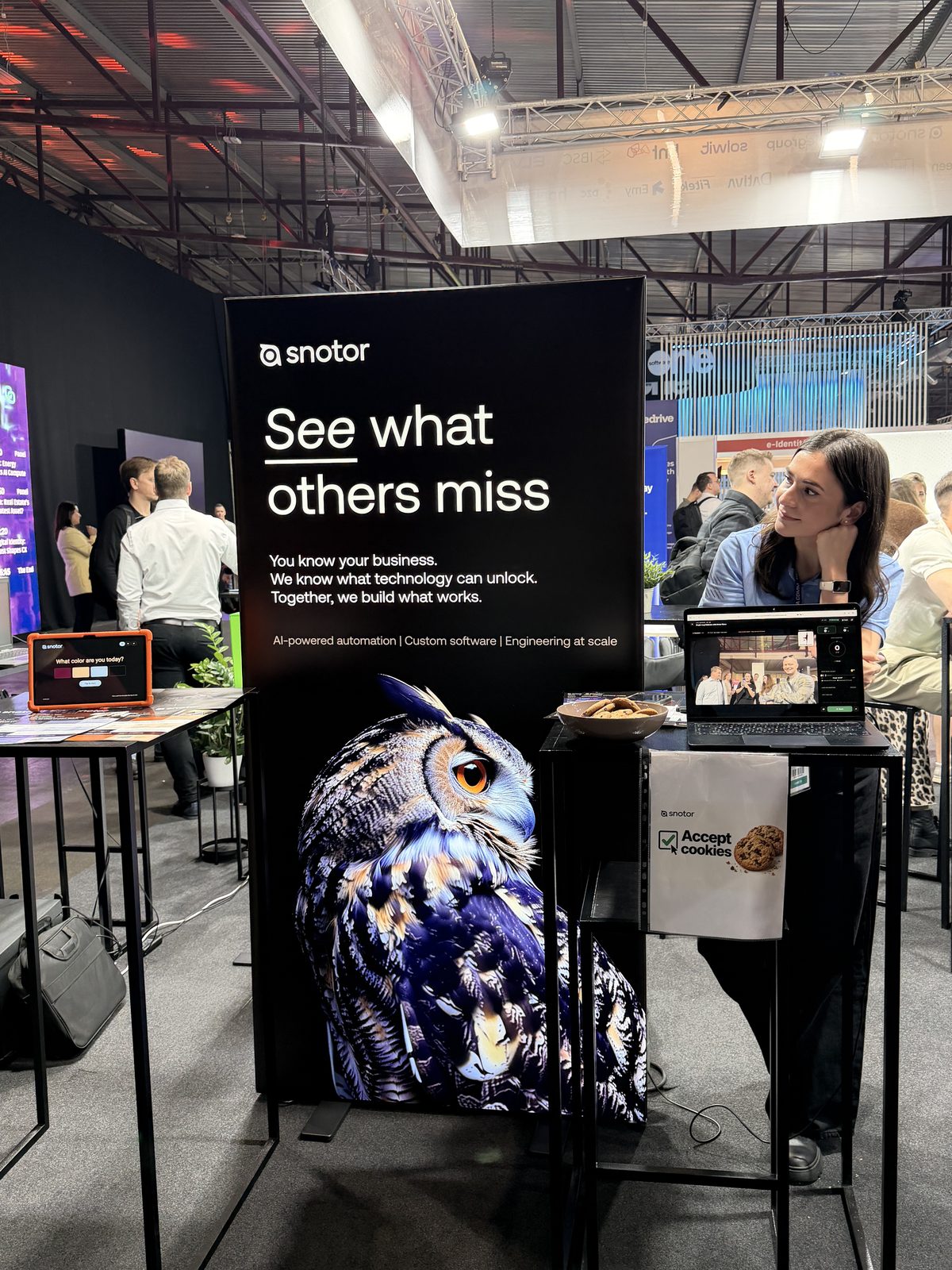
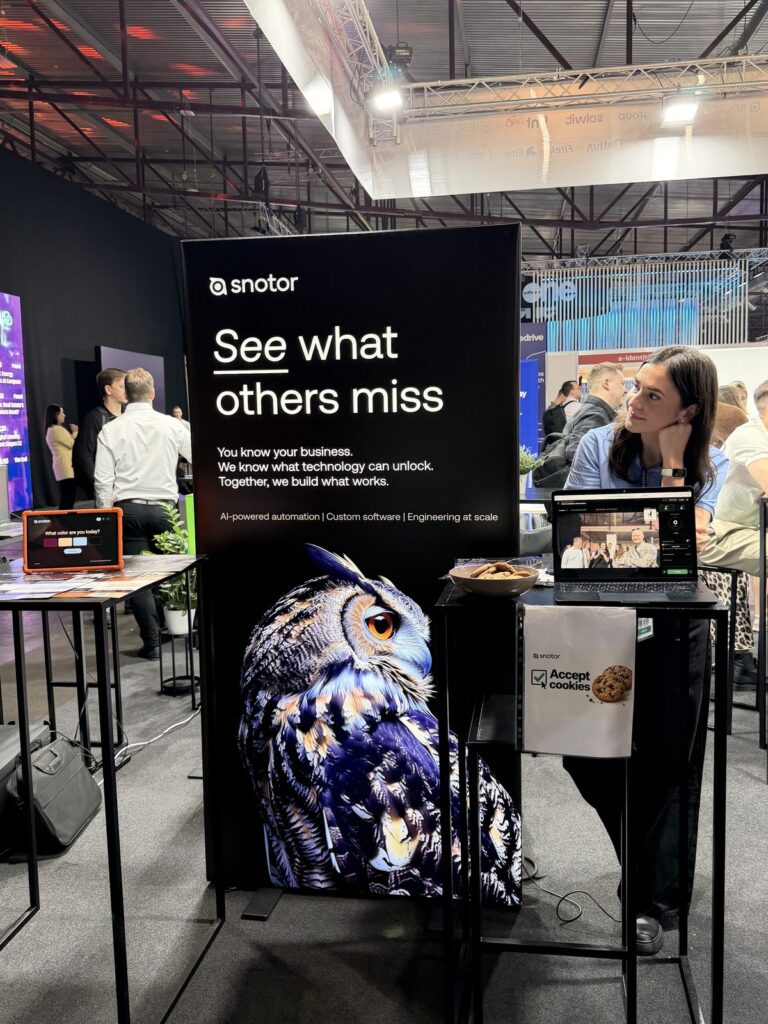
Two more talks did exactly what we ask of everyone, but we kept them out of our assessment: Snotor is our client (we created the new brand they presented for the first time on this stage), and INNELS is our partner in the MATCH Network. Judge for yourself.
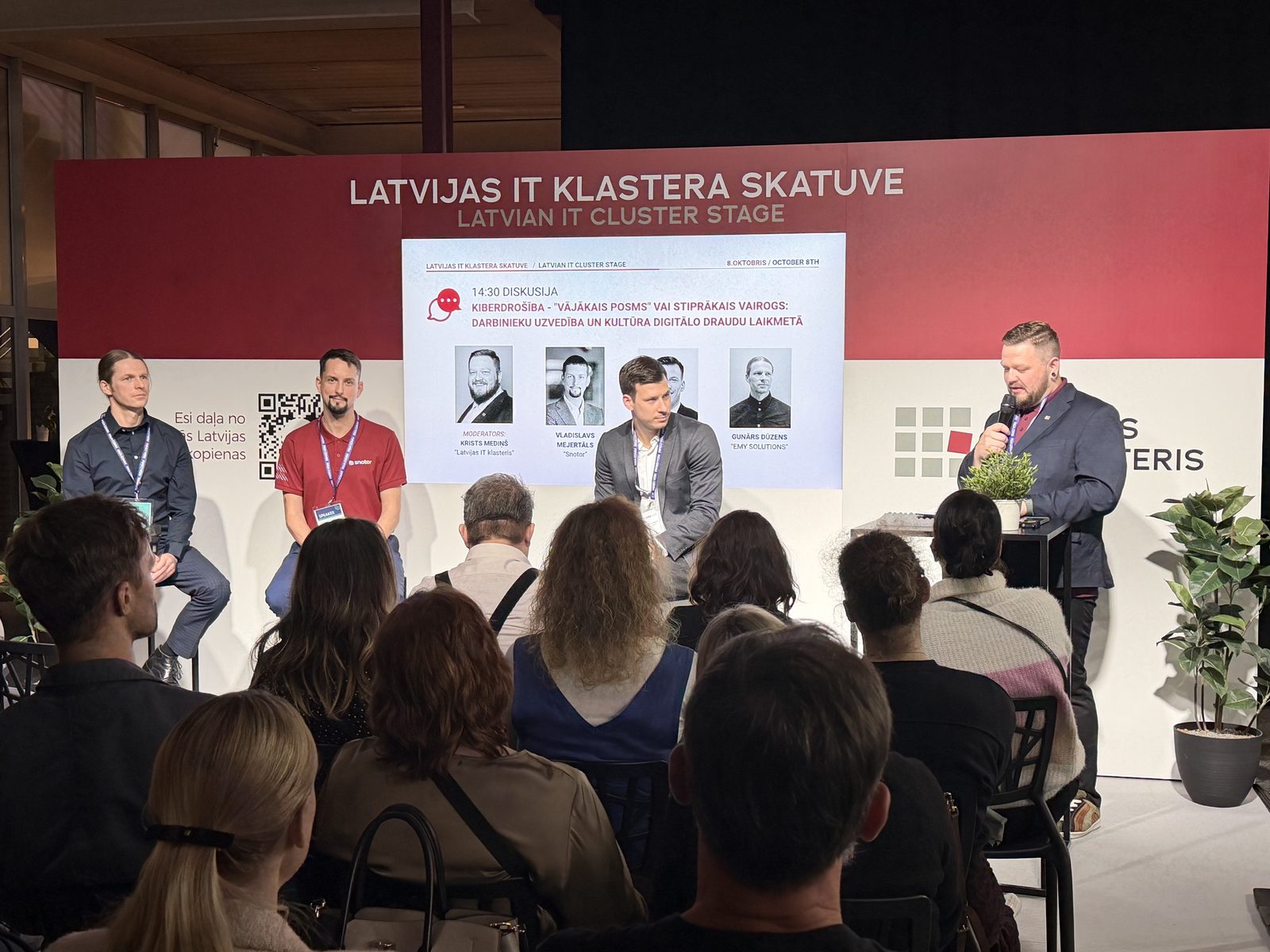
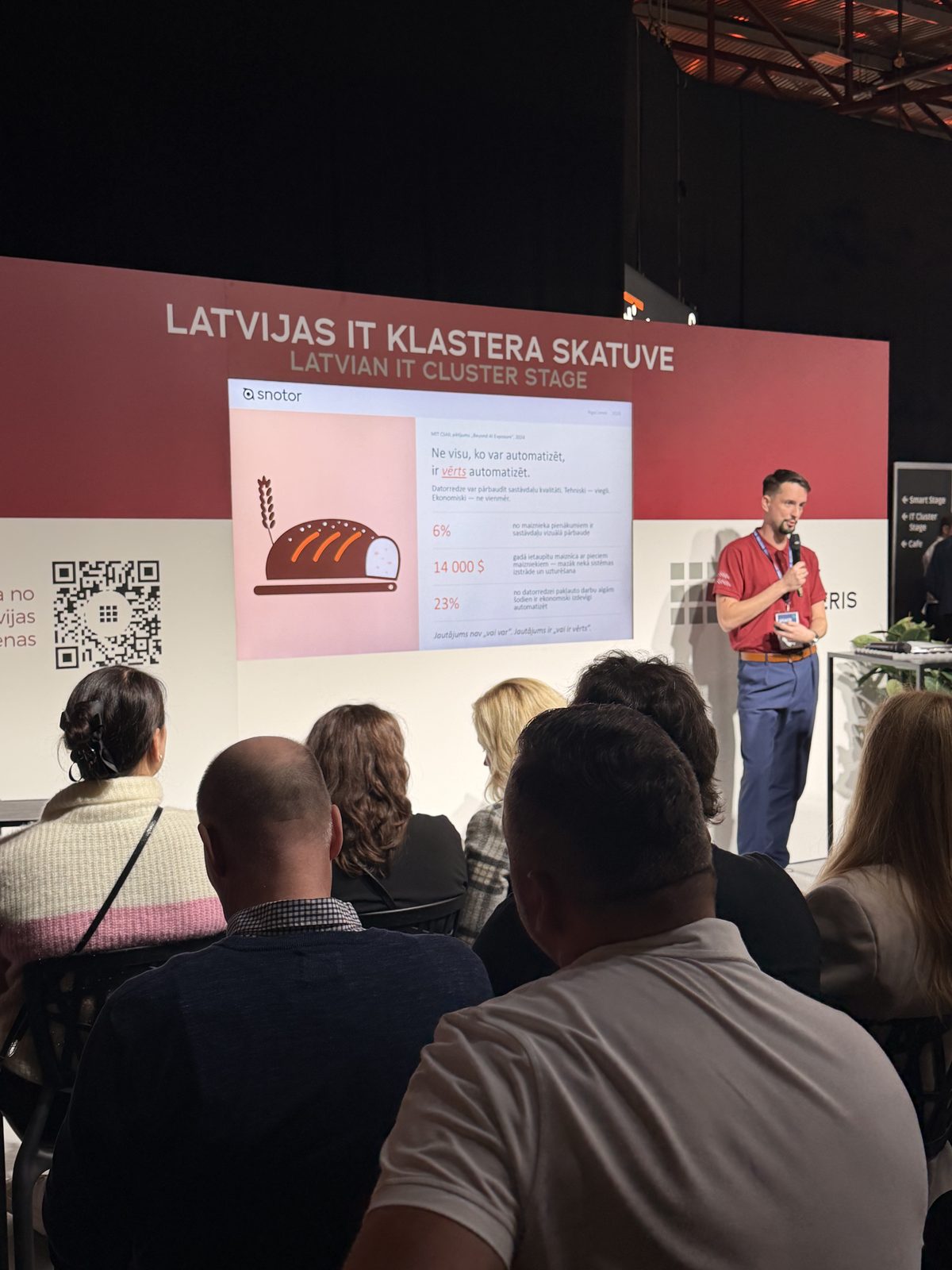
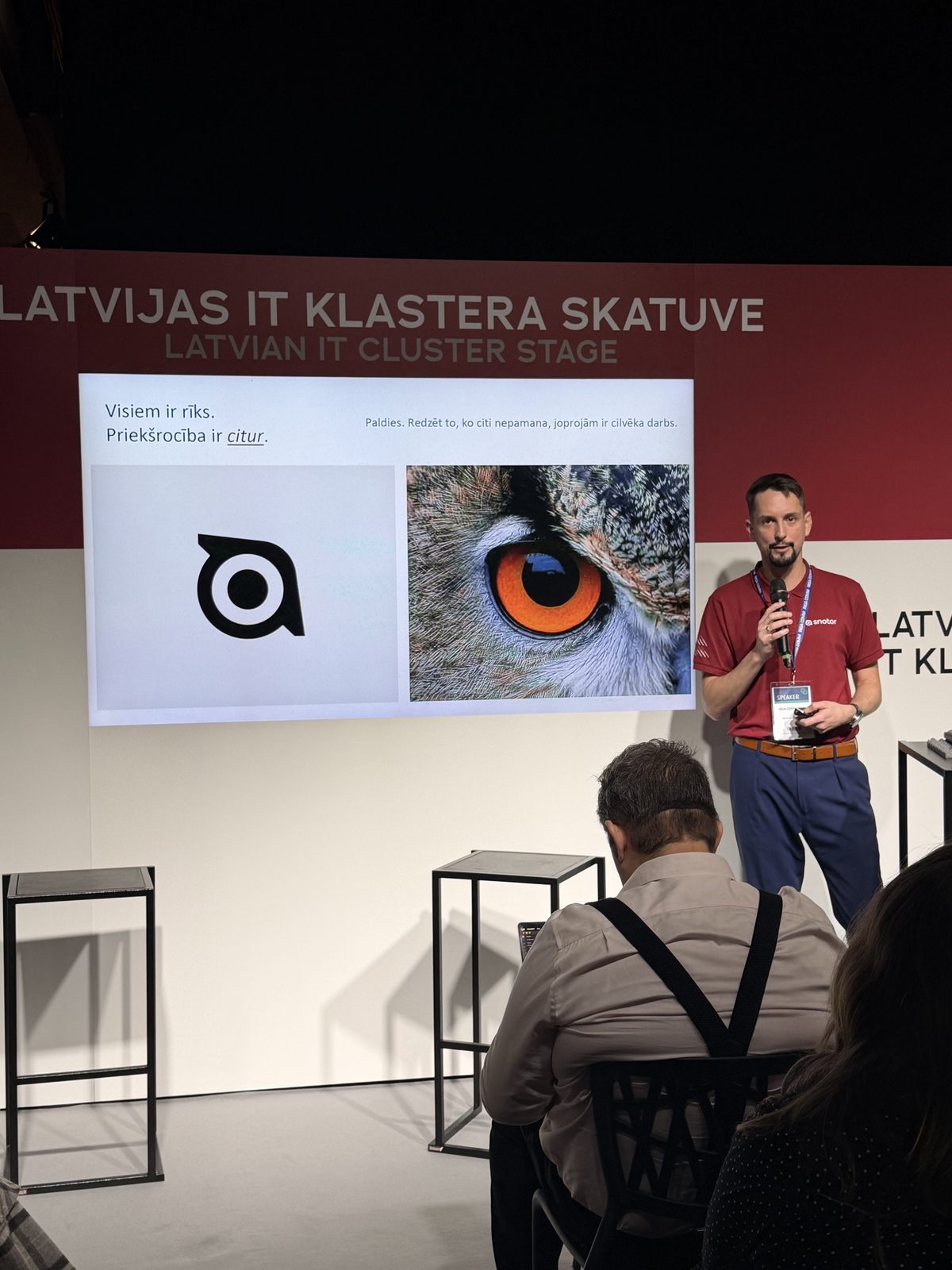
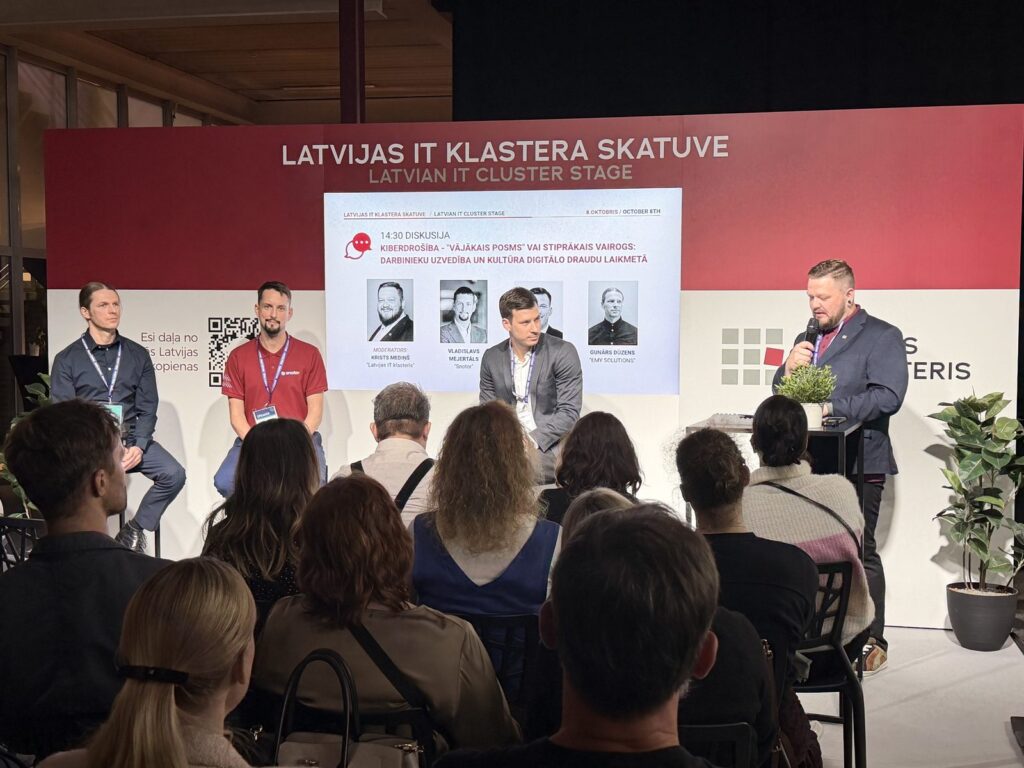
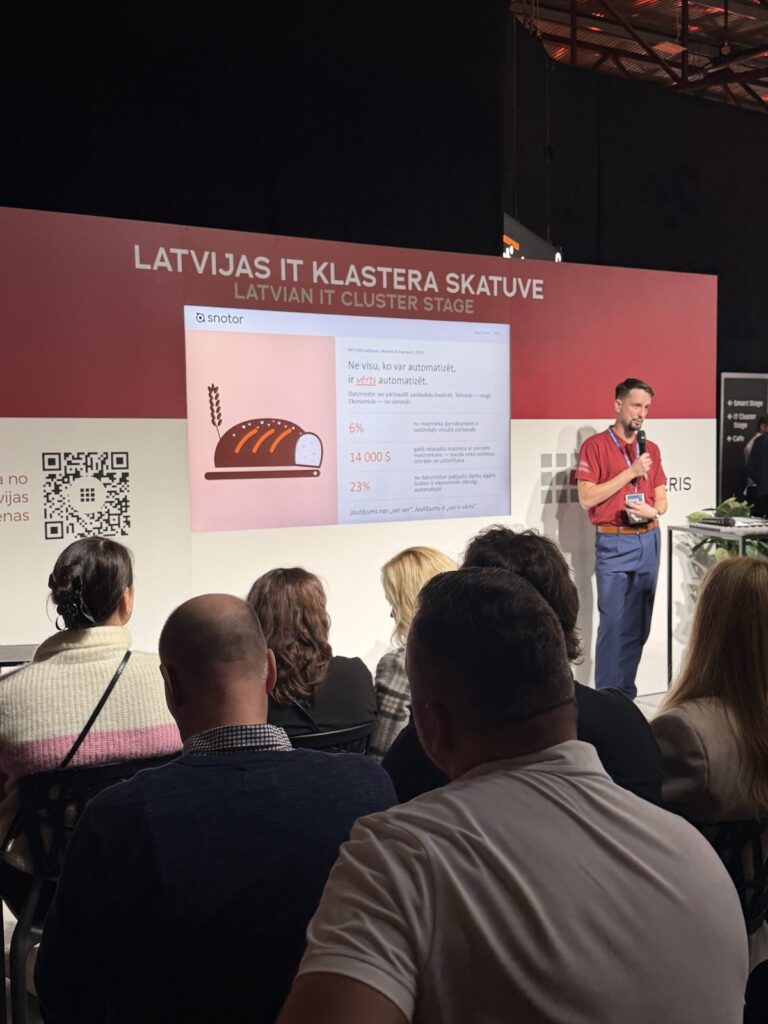
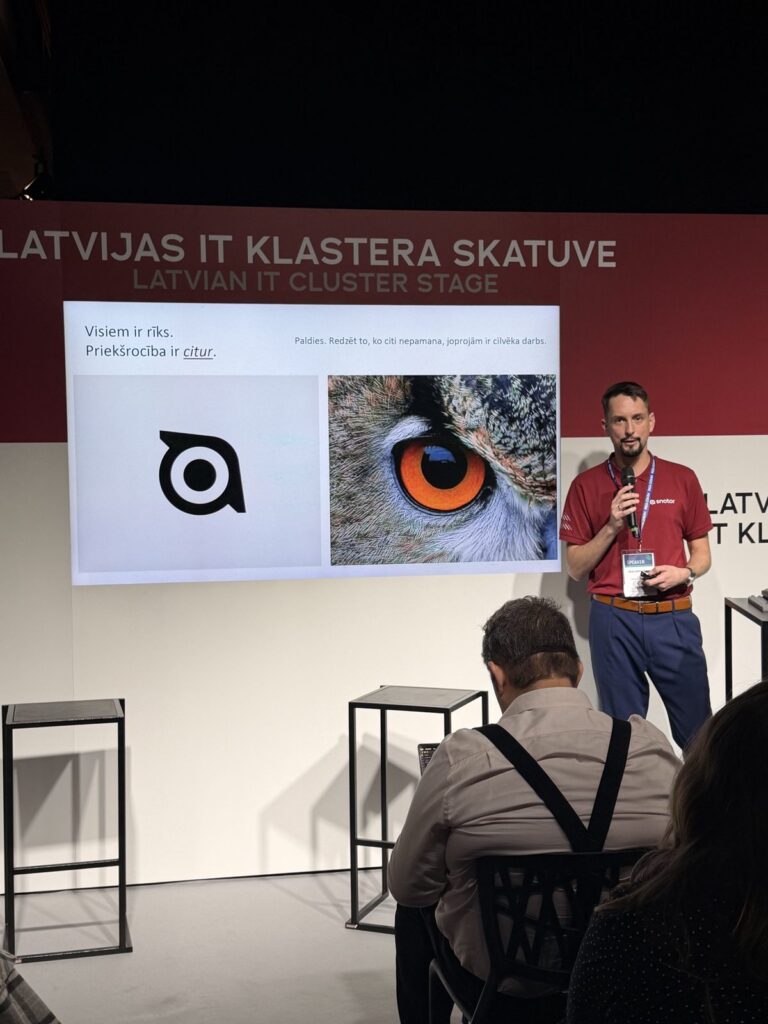
Vladislavs Mejertāls, CEO, Snotor, “Rīks ir ikvienam. Priekšrocība ir citur.” (“The tool is for everyone. The advantage is elsewhere.”). Zero self-promotion, but lots of statistics, real cases and solid research behind it: Gartner on agent projects being shut down and the Jevons paradox (the cheaper it is to create, the more work there is, not less). Plus real cases and examples, including ones where automation and AI are not cost-effective and simply not needed.
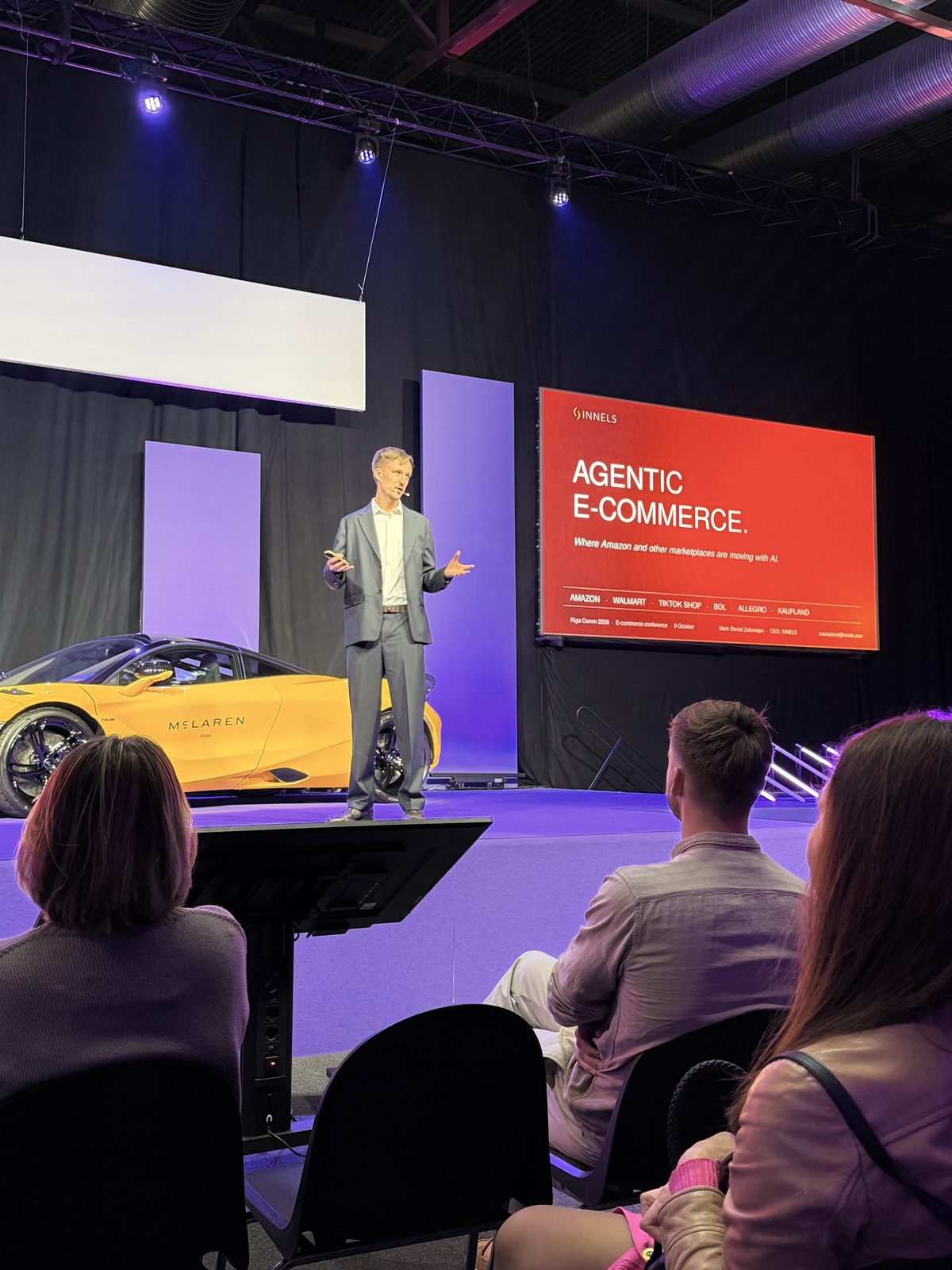
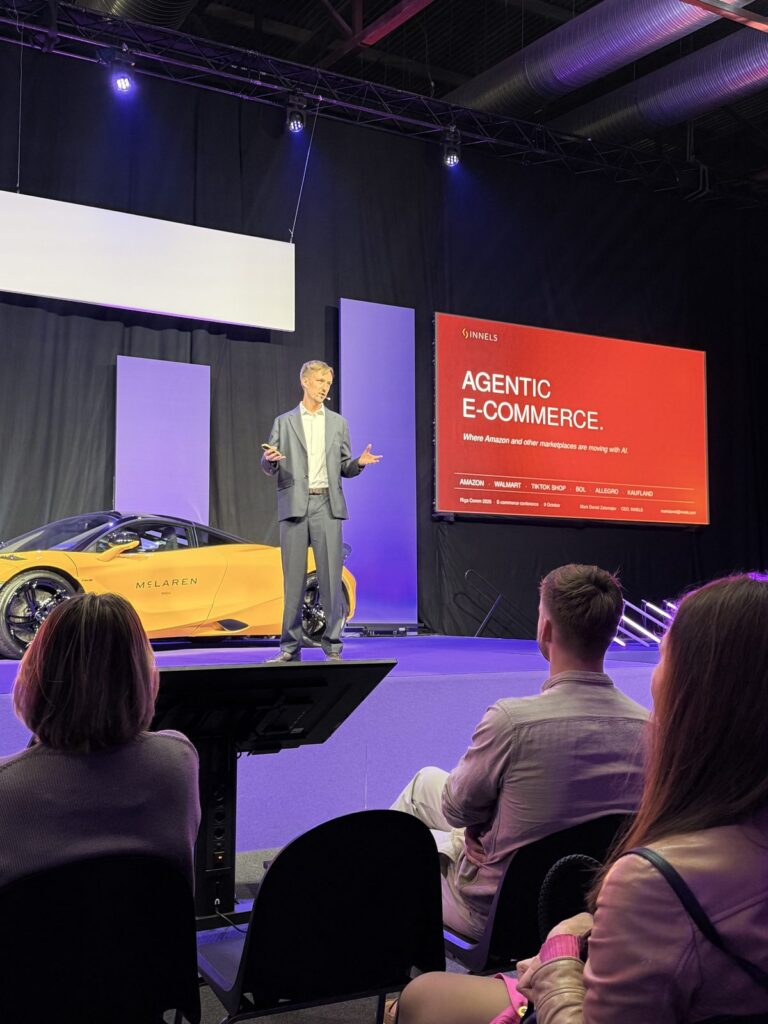
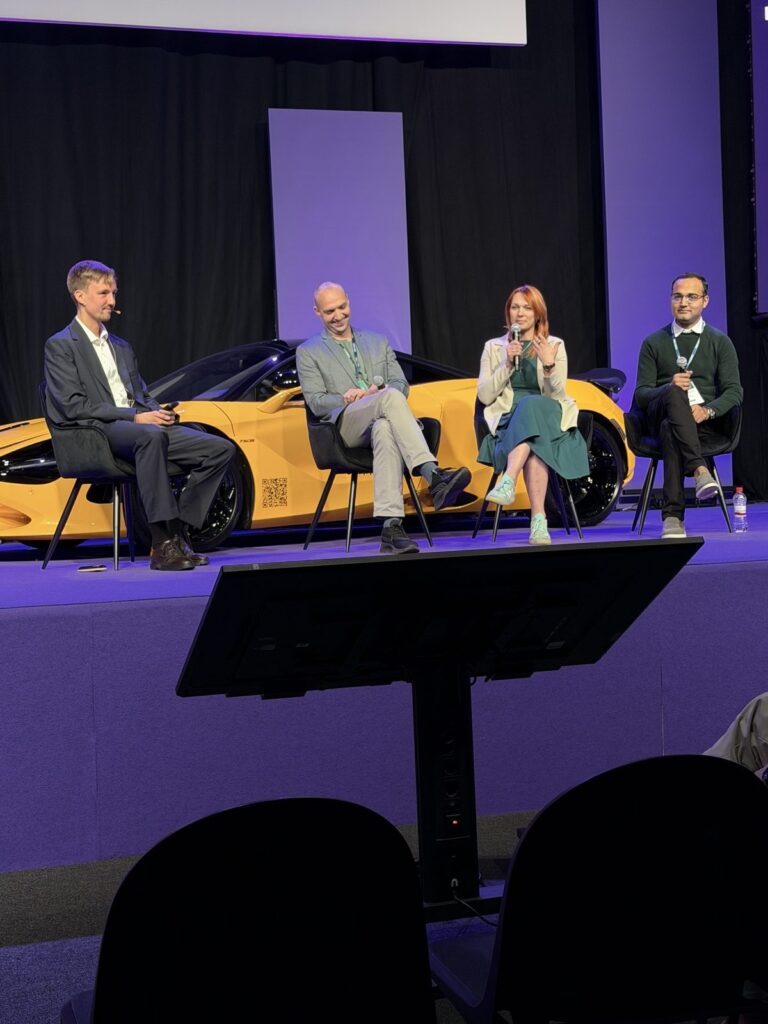
Mark Daniel Zalomajev, CEO, INNELS, “AI and Agentic E-commerce – Where Amazon and Other Marketplaces Are Moving”. Mark explained where Amazon is heading in the AI era: how product search changes when shoppers ask an assistant instead of typing into a search bar, which tools Amazon is launching for sellers, and what needs to be rebuilt in listings and advertising right now. He gave the D2C panel (“How to Build the Business Case for Expanding Through D2C Marketplaces”) to the brands, and the result was a live discussion. Madara Cosmetics, Ette Tete and IGLU Soft Play talked in numbers and failures: blocked accounts, frozen money, months spent on recovery.
Recommendations
This is already the second year we’ve come to RIGA COMM with our own review, so we might as well begin with: “Dear Slim, this is Stan, your biggest fan…”. So here is our annual letter and a short list of recommendations.

Run QA on your speakers
We understand that just turning on the lights in hall BT1 costs a lot of money, and narrowing the speaker funnel for the sake of quality would mean shooting the organisers’ event business in the foot. But even minimal QA would bring community building as a bonus. Put together a committee of the best speakers from past years, research the top Baltic cases in advance, run a vote on social media about who people want to see and what they want to hear. Choose the people who have really done breakthrough work, and ask them to speak. And for panels, pick people with completely different opinions.

Use AI yourselves, don’t just talk about it
In one evening before the conference, we vibe-coded a widget where each of us could see topics matched to our profile, our own schedule and where our colleagues were at that moment. We’re sure the region’s leading tech conference can build something like this for itself:
- algorithmic matching of attendees and a zone for short 1:1 meetings, where everyone knows why they are there;
- onboarding: why you should go and where, with a personal route;
- a mandatory follow-up with the materials you asked for;
- an open feedback form for every talk.

It’s time to stop giving AI its own track
Imagine if there were stages called “MS Office”, “Email” and “Spellchecker”. It would make more sense to divide the conference by business task (marketing, sales, operations, finance) and keep AI inside each of them as a tool. Otherwise, as one of our colleagues put it, “you rush from talk to talk trying to decide where to go, instead of spending the whole conference in your own hall among people like you”.
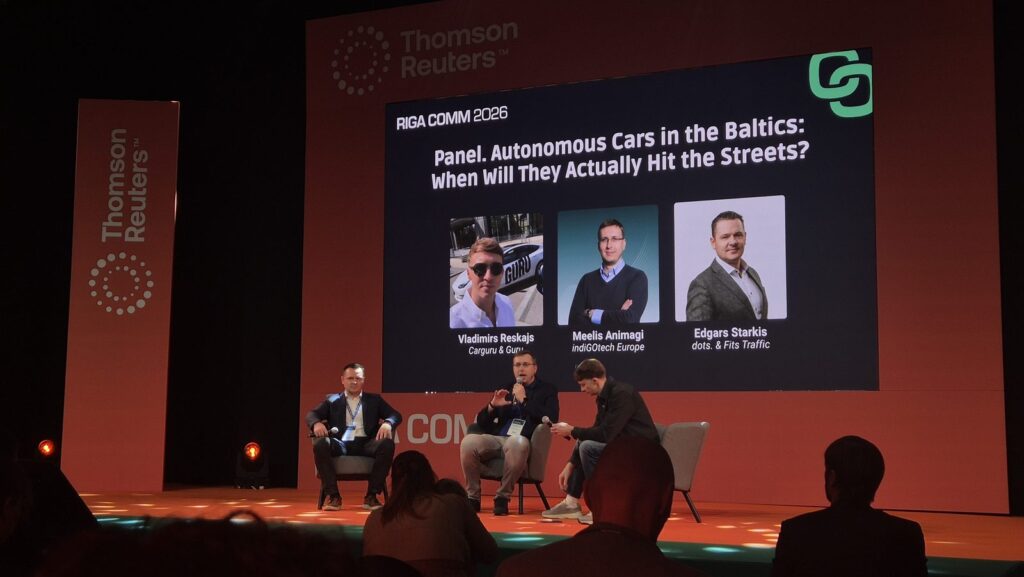
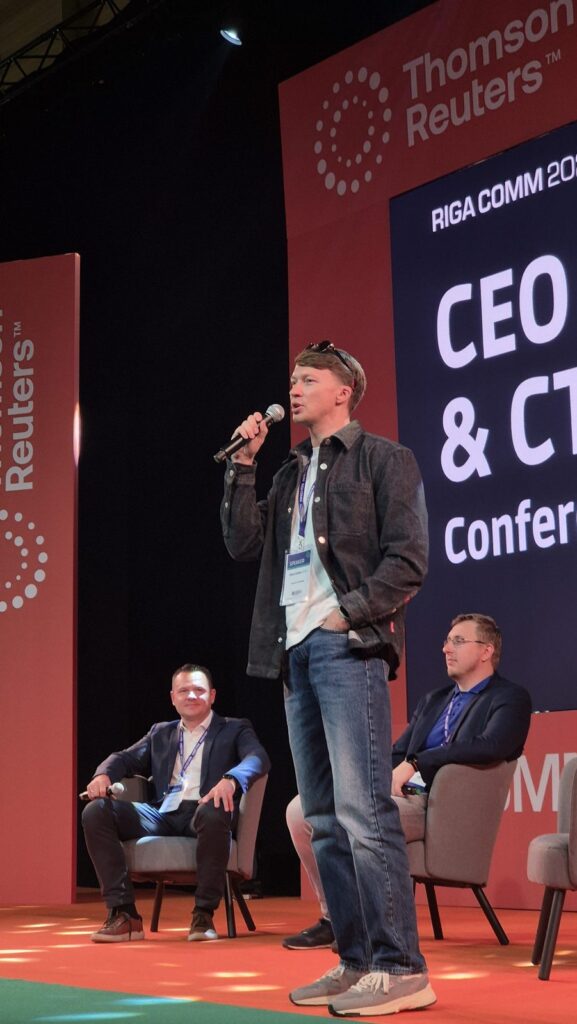
And a little sentiment to finish
More than ten years ago, young and inexperienced, we came to this conference for the first time. One of us still has a giveaway from some IT company lying around somewhere: a sticker to cover a laptop camera (funny how, over the years, we’ve stopped caring that someone is watching us). But what we remember most is a talk on launching international PPC campaigns by Sergejs Volvenkins. In a way, it was one more small but important push towards the path we later chose in marketing. Hence the main conclusion: people and their work are the heart of this whole event.
It’s hard to become a leader, but it’s even harder to stay one. Good luck to you on this difficult road, guys.
And our main advice to the speakers of 2027: show us something that can’t be generated.